
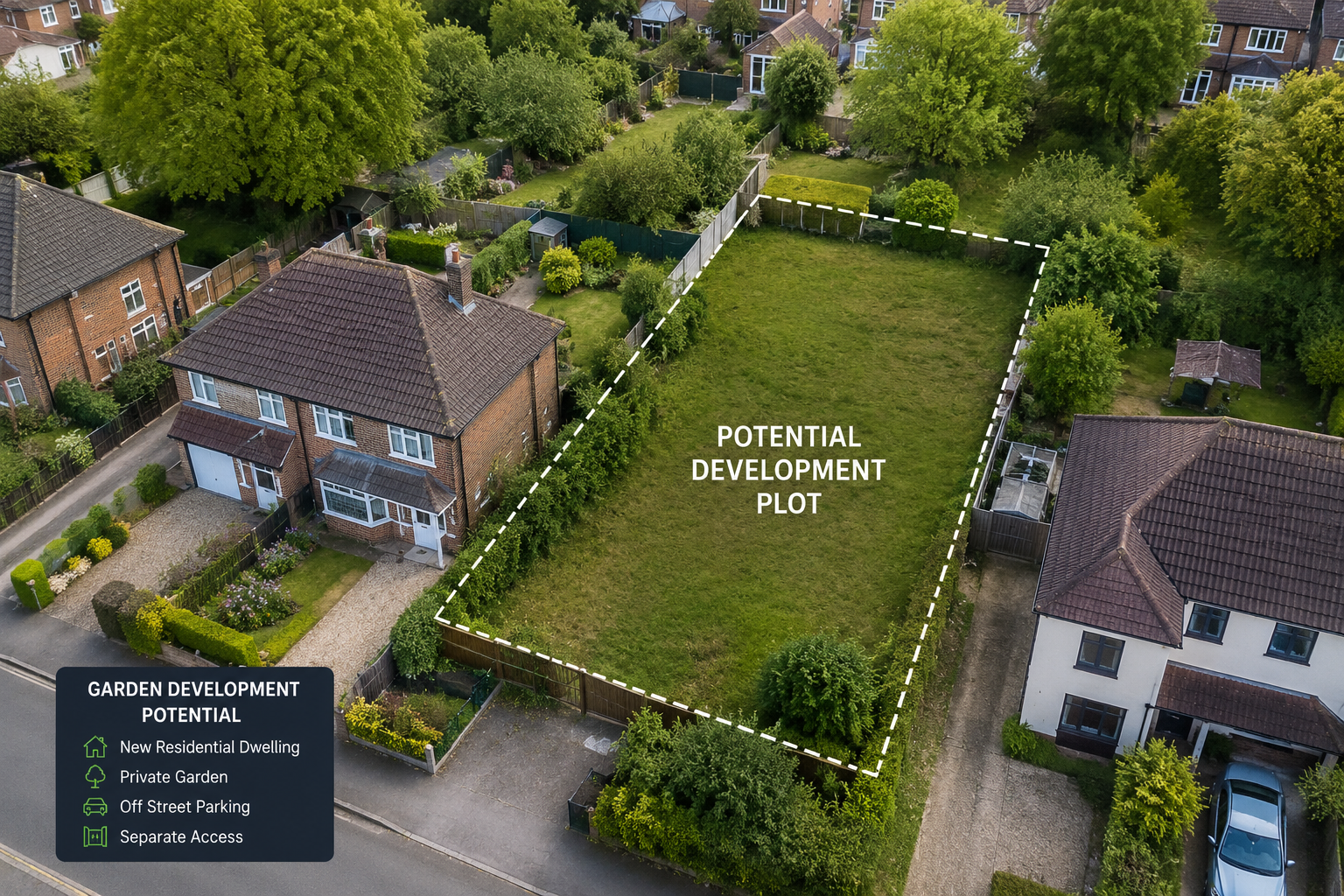
Could Your Garden Have Development Potential?
Large gardens, side plots and underused residential land can sometimes provide opportunities for additional homes or other forms of development. The potential depends on the site, its surroundings and the planning position.
FREE LAND ASSESSMENT →What Makes A Large Garden Worth Investigating?
Size is only part of the picture. A garden or residential plot needs to be considered in the context of its location, surroundings, access and planning position.
Size & Layout
The size, shape and configuration of the land can influence whether a separate dwelling or small development could potentially be accommodated.
Relationship To The Settlement
Gardens within established residential areas can have a very different planning context from land beyond the built-up edge of a settlement.
Access & Highway Position
Existing access, potential new access and the relationship with the surrounding road network can all affect development potential.
Existing Development
The character, density and pattern of nearby development can help establish whether a proposal could sit comfortably within its surroundings.
Planning Policy
Local planning policies, settlement boundaries and other planning considerations will influence what may be achievable on a particular site.
Site-Specific Constraints
Trees, ecology, flooding, overlooking, privacy, landscape and other physical constraints may all need to be considered.
A large garden does not automatically mean a development opportunity. The purpose of an initial assessment is to establish whether the characteristics of your particular site justify looking at the opportunity further.
What Could Be Possible?
Depending on the site, its surroundings and the planning position, a large garden or surplus residential plot may offer different forms of development opportunity.
A Separate New Home
A substantial garden may sometimes be capable of accommodating a separate dwelling, subject to the relevant planning considerations.
Infill Development
Where a suitable gap exists within an established pattern of development, garden land may sometimes provide an opportunity for infill housing.
Backland Development
Land behind existing properties can sometimes offer potential for development where access, layout and surrounding character support an appropriate scheme.
Side Plot Development
Wide side gardens or unused areas alongside an existing property may sometimes provide space for an additional residential plot.
Plot Subdivision
In some circumstances, part of a residential plot may be capable of being separated and considered independently for development.
Small Residential Schemes
Larger parcels may potentially accommodate more than one new dwelling, although this will depend heavily on the site's characteristics and planning context.
These are potential opportunities, not guarantees. The appropriate development approach will depend on the individual site and would need to be considered against the relevant planning and site-specific constraints.
What Determines Whether It Can Work?
A garden may look suitable at first glance, but the development potential of any individual site depends on a combination of planning, physical and practical considerations.
Planning Policy
Local planning policies, settlement boundaries and the relevant development plan can all influence whether residential development is acceptable in principle.
Access & Highways
A potential development plot needs a suitable means of access. Highway visibility, road conditions and the position of any proposed access may all need consideration.
Site Layout
The shape and dimensions of the garden can affect how a dwelling, parking, access and private amenity space could potentially be arranged.
Surrounding Character
The existing pattern, density and character of nearby development can influence how a new proposal might fit within the area.
Neighbours & Privacy
Relationships with neighbouring properties, overlooking, privacy, outlook and separation distances can all influence the design and acceptability of a proposal.
Physical & Environmental Constraints
Trees, ecology, flood risk, drainage, landscape considerations and other site-specific constraints may affect what can realistically be achieved.
There is no simple checklist that guarantees planning permission. The important point is to understand the particular circumstances of your site before deciding whether further time, money or planning work is justified.
Development Potential Can Change The Value Of Land
A large garden is normally valued as part of the existing residential property. If there is a realistic opportunity for separate residential development, however, the land may have a very different value proposition.
That does not mean every garden will be worth more or that planning permission can be assumed. The potential value depends on what may realistically be achievable, the planning prospects, location, market conditions and the costs and risks involved.
Understanding this before deciding how to deal with the land can help you make a more informed decision about your next step.
Existing Residential Land
The garden or surplus land forms part of the existing property.
Development Potential Identified
Initial assessment indicates that a separate development opportunity may be worth investigating.
Planning & Development Strategy
The appropriate route can then be considered based on the landowner's objectives and the site's prospects.
A More Informed Decision
The landowner can decide whether to pursue the opportunity, seek planning, work with a developer, promote the land or consider another route.
Development potential and land value are site-specific and cannot be established from garden size alone.
The Right Route Depends On Your Objectives
If your garden appears to have development potential, there is more than one way to move forward. The most suitable route will depend on the site, planning prospects and what you want to achieve.
Land Promotion
Where appropriate, a land promoter may fund and manage the planning process at their own risk, with the landowner sharing the upside if planning is achieved and the land subsequently sold.
Option Agreement
An option can provide a route where a developer agrees terms with the landowner and takes the planning and development opportunity forward, with the purchase price agreed in advance.
Developer Introduction
If the site is not suited to Revive promoting or taking an option on the land, we may be able to identify or introduce a suitable developer.
Planning Consultancy
Landowners who are comfortable funding the planning process themselves may choose to pursue planning independently, retaining the potential to benefit from the resulting sale value.
Sale & Disposal
Where planning has already been secured, or where an unconditional sale is more appropriate, the focus may instead be on finding the right buyer and maximising the disposal opportunity.
Understand Your Land Before You Decide
A large garden can look promising, but it is difficult to understand its true potential from size alone.
An initial assessment can help consider the location, surrounding development, access, planning position and other factors that may influence whether an opportunity is worth investigating.
The aim is not to promise planning permission or a particular value. It is to help you understand whether there appears to be a realistic opportunity and what your possible next steps could be.
Know what you have, understand what may be possible, and then decide how — or whether — you want to proceed.
Could Your Garden Have Development Potential?
If you own a large garden, side plot or surplus residential land, we can provide an initial assessment to help you understand whether there may be an opportunity worth exploring.
REQUEST YOUR FREE LAND ASSESSMENT →Frequently Asked Questions
Some of the questions landowners commonly ask when considering the development potential of a large garden.
Potentially. A large garden may sometimes provide an opportunity for a separate dwelling, but this depends on the site's location, planning policy, access, layout and other site-specific factors. Having a large garden does not automatically mean that planning permission will be granted.
Large rear gardens, corner plots, side gardens, wide frontage properties and other substantial or underused residential land may be worth investigating. The surrounding development, location and access are just as important as size.
Most proposals to create a separate residential dwelling or development plot will require the relevant planning consent. The appropriate planning route depends on the proposal and the individual circumstances of the site.
Factors can include planning policy, settlement location, access, highway considerations, site layout, neighbouring properties, privacy, trees, ecology, flooding and the character of the surrounding area.
Development potential can sometimes create a significant difference between the value of land as garden and its potential value as a development opportunity. However, value is highly site-specific and depends on what can realistically be achieved, planning prospects, market conditions and costs.
Yes. An initial assessment can help establish whether the site appears to have development potential and what routes may be worth considering. Depending on the circumstances, these could include promotion, an option arrangement, a developer introduction, planning consultancy or disposal.
Yes. Revive Estates Group offers a free initial land assessment with no obligation to proceed. The purpose is to help you understand whether your land may present an opportunity worth investigating further.