
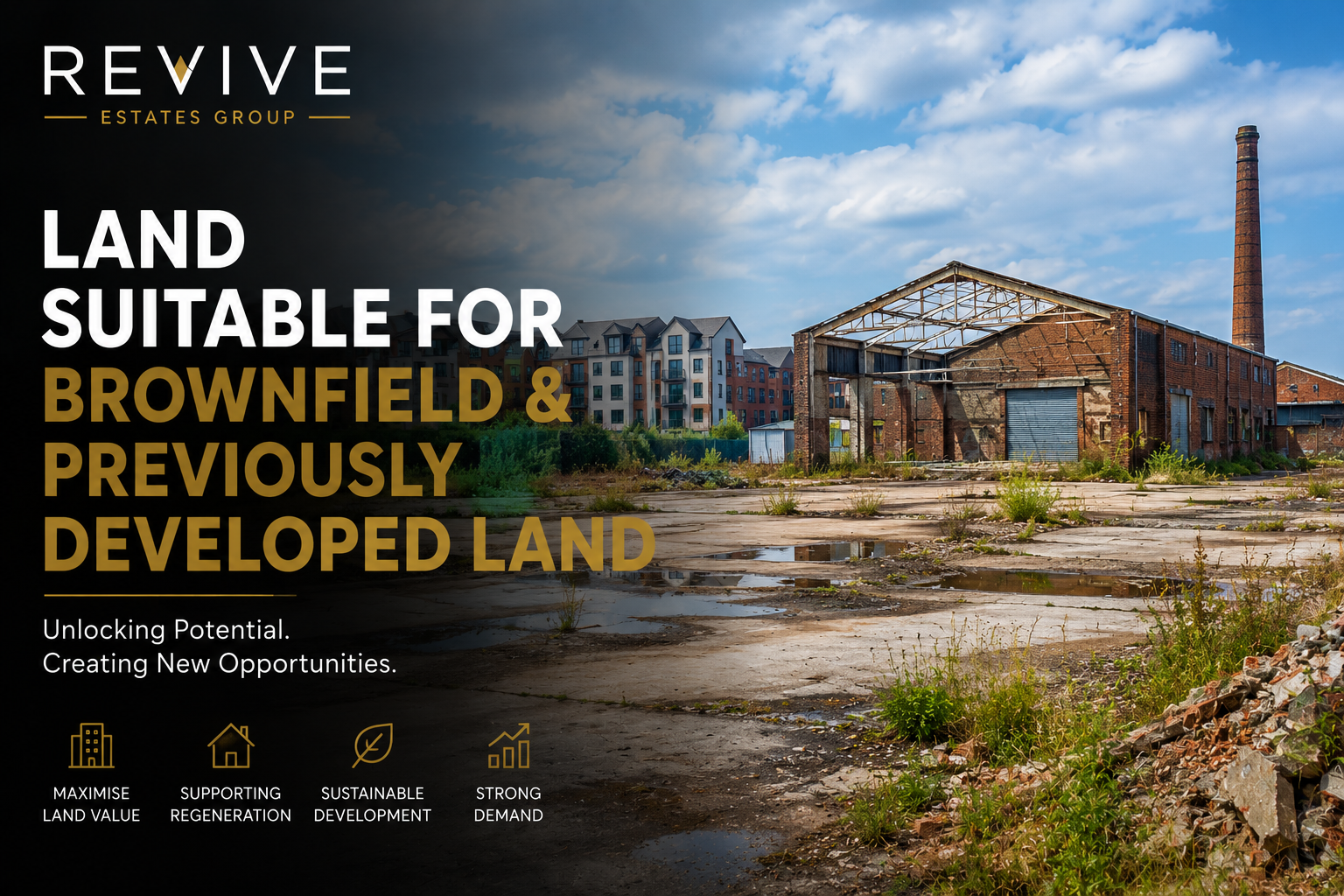
Could Your Previously Developed Land Have Development Potential?
Brownfield land can present some of the most interesting development opportunities for landowners. Former industrial sites, redundant commercial land, yards, garages and other previously developed sites can sometimes offer opportunities for redevelopment or new uses.
At Revive Estates Group, we help landowners understand whether their brownfield site may have development potential, what planning considerations may apply and which route could best maximise its value.
REQUEST YOUR FREE LAND ASSESSMENT →What Is Brownfield Land?
Brownfield land generally refers to land that has previously been developed. It can include sites where buildings, commercial uses, industrial activities or other forms of development have existed in the past.
Some brownfield sites may now be vacant, underused, occupied by redundant buildings or used for purposes that no longer make the best use of the land.
The fact that land has previously been developed does not automatically mean that it can be redeveloped. The planning history, current use, location and characteristics of each site still need to be assessed.
Former Commercial Sites
Redundant shops, offices, workshops, yards and other commercial premises may contain land or buildings that could be worth investigating for alternative uses or redevelopment.
Former Industrial Land
Previously developed industrial sites can sometimes provide opportunities for regeneration, redevelopment or new commercial and residential uses, subject to planning and site constraints.
Redundant Buildings & Yards
Buildings and hardstanding areas that are no longer required for their original purpose may warrant investigation to establish whether another viable use or redevelopment opportunity exists.
Previously Developed Residential Land
Former residential sites, garages, compounds and surplus developed land can sometimes offer opportunities for infill, replacement or additional development.
Brownfield does not automatically mean developable. A site's previous development is only one part of the assessment. Planning policy, access, environmental matters, contamination, surrounding uses and the proposed development all need to be considered.
What Types Of Brownfield Sites?
We are interested in a wide range of previously developed land and property. The important question is not simply whether a site is brownfield, but whether there may be a realistic opportunity to improve its use or value.
Former Industrial Sites
Redundant industrial premises, yards and previously developed sites that may now be underused or no longer suited to their original purpose.
Commercial & Employment Sites
Former commercial premises, workshops, offices, storage yards and employment sites where an alternative use or redevelopment may be worth investigating.
Redundant Buildings
Buildings that are vacant, obsolete or no longer suitable for their existing use may provide opportunities for conversion, replacement or redevelopment.
Yards & Hardstanding
Previously developed yards, compounds and areas of hardstanding can sometimes form part of a wider redevelopment opportunity.
Previously Developed Residential Sites
Garages, former residential plots, surplus land and other developed residential sites may have potential for infill, replacement or additional development.
Mixed-Use & Complex Sites
Larger or mixed-use sites can sometimes offer opportunities where several existing uses, buildings or areas of previously developed land could be considered together.
Don't assume your site is too small or too unusual.
Brownfield opportunities can take many different forms. If you own previously developed land that is vacant, underused or no longer serving its original purpose, an initial assessment can help establish whether it is worth exploring further.
Why Can Brownfield Land Be Attractive?
Previously developed land can sometimes offer advantages over undeveloped sites, particularly where it sits within or close to an established settlement and already has connections to surrounding infrastructure.
Established Locations
Many brownfield sites are located within existing settlements or established employment areas, bringing them closer to homes, services and local amenities.
Existing Infrastructure
Some previously developed sites already benefit from access roads, utilities and other infrastructure, although capacity and suitability still need to be assessed.
Regeneration Potential
Redevelopment can provide an opportunity to bring vacant, underused or obsolete land and buildings back into productive use.
Potential Housing Opportunities
Depending on planning policy, location and site characteristics, some brownfield sites may have potential for residential development or mixed-use schemes.
Making Better Use Of Land
A previously developed site that is no longer serving a useful purpose may have greater value if an appropriate alternative use can be identified.
But brownfield does not automatically mean easier. Contamination, access, ecology, flooding, neighbouring uses, heritage and other constraints can all influence whether redevelopment is realistic.
What Planning Factors Need To Be Considered?
Every brownfield site is different. A site's previous development can be an important starting point, but a realistic assessment needs to consider the wider planning and physical constraints.
Planning Policy
Local planning policies and the wider development plan will influence which uses and forms of development may be appropriate for the site.
Access & Highways
Existing access arrangements, visibility, highway capacity and the ability to safely serve a proposed development can all affect what may be achievable.
Contamination
Previous industrial or commercial uses can sometimes create contamination considerations. The site's history and any environmental investigations may therefore be important.
Flood Risk & Drainage
Flood risk, surface water and drainage requirements can influence the suitability and design of a proposed redevelopment.
Ecology & Biodiversity
Existing buildings, vegetation and previously developed areas can still contain ecological interests that may need to be understood before development proceeds.
Heritage & Surrounding Character
Listed buildings, conservation areas, heritage assets and the character of neighbouring development can influence the appropriate scale and design of a scheme.
Existing Buildings & Uses
The condition, lawful use and arrangement of existing buildings can affect whether conversion, replacement, intensification or redevelopment is the most appropriate route.
The site needs to be considered as a whole. A brownfield site may look promising from its previous use alone, but access, environmental constraints, planning policy and the surrounding area can all determine whether redevelopment is realistic.
What Could Your Brownfield Land Be Worth?
Brownfield land can sometimes have significantly greater value when an appropriate development or alternative use is identified.
However, there is no standard value for brownfield land. The opportunity depends on what can realistically be achieved, the planning position and the level of demand for the resulting development.
Understanding the potential before deciding whether to sell, promote or develop the site can help you make a more informed decision.
Factors That Can Influence Value
Location
Local demand, accessibility, nearby services and the strength of the surrounding property market can all influence development value.
Development Capacity
The amount and type of development that may realistically be accommodated can have a major effect on the site's potential value.
Planning Prospects
The strength of the planning case and the relevant local planning policy can influence how the opportunity is valued.
Site Constraints
Access, contamination, flooding, ecology, demolition and infrastructure requirements can all affect the economics of redevelopment.
Market Demand
The demand for residential, commercial or alternative uses in the local area can affect the attractiveness of the opportunity to buyers and developers.
Development potential and land value are different questions. The strongest assessment considers what may be achievable, the likely costs and the planning risks before reaching a view on the site's potential value.
What Can You Do With Brownfield Land?
If your site appears to have development potential, there are several possible routes forward. The best option will depend on the planning position, the scale of the opportunity and your objectives as a landowner.
Planning Strategy
A planning-led approach may be appropriate where the site's potential needs to be investigated further and a suitable planning strategy can be developed.
Land Promotion
Where appropriate, a land promoter may take the site forward through the planning process, with the aim of improving its planning position before a future sale.
Developer Introduction
Depending on the nature and scale of the opportunity, the site may be suitable for introduction to a developer looking for brownfield or redevelopment opportunities.
Option Agreement
An option arrangement can provide a route for a developer to take the opportunity forward under agreed terms, subject to the particular circumstances of the site.
Sale & Disposal
Where the opportunity is ready for the market, the focus may be on identifying suitable buyers and presenting the site in a way that helps maximise the disposal opportunity.
Could Your Brownfield Site Have Development Potential?
If you own previously developed land, a redundant commercial site, former industrial property or an underused building, Revive Estates Group can provide an initial assessment of the opportunity.
We can help you understand whether the site appears worth investigating further and what potential routes may be available to maximise its future value.
REQUEST YOUR FREE LAND ASSESSMENT →Frequently Asked Questions
Some of the most common questions landowners ask when considering whether previously developed land may have redevelopment potential.
Brownfield land generally refers to land that has previously been developed. It can include former industrial, commercial, residential and other developed sites that are now vacant, underused or suitable for consideration of an alternative use.
No. Previous development is only one part of the assessment. Planning policy, access, environmental constraints, flooding, ecology, heritage and the proposed use can all affect whether redevelopment is realistic.
Some brownfield sites may have potential for residential development, depending on their location, planning policy, existing use, access, site characteristics and the suitability of the proposed scheme.
It can. Previous industrial or commercial uses may create considerations such as contamination, environmental constraints or remediation requirements. The site's planning and environmental history should therefore be investigated.
Potentially. The appropriate route will depend on the building's lawful use, planning history, condition, location and the proposed alternative use or redevelopment.
Values vary significantly depending on location, development capacity, planning prospects, site constraints, market demand and the likely costs associated with redevelopment.
There is no single answer. Depending on the site, it may be appropriate to sell the land as it stands, pursue planning or promotion first, or explore a developer or option arrangement. The right strategy depends on the individual opportunity and the landowner's objectives.
Yes. Revive Estates Group offers a free initial land assessment to help establish whether previously developed land or property may have development potential and whether it is worth investigating further.