
The short answer
Yes. Land outside a settlement is not automatically prohibited from development under the 2026 National Planning Policy Framework (NPPF). However, the rules are more restrictive than for land within settlements. Policy S5 identifies certain forms of development that can be acceptable outside settlements, while other proposals need to demonstrate that the relevant planning requirements are met. The site’s location, relationship with an existing settlement, infrastructure, housing need and other planning constraints can all be important.
Can Land Outside a Settlement Be Developed?
Being outside a settlement does not automatically mean that land cannot be developed.
The current NPPF distinguishes between development within settlements and development outside them. Policy S5 sets out the principle of development outside settlements and identifies certain types of development that should be approved unless their benefits would be substantially outweighed by adverse effects.
However, the policy takes a more restrictive approach to development outside settlements because planning policy seeks to avoid unsustainable patterns of growth and protect the character of the countryside.
For a landowner, this means that the important question is not simply whether land is outside a settlement. It is what type of development is being proposed, where the site is located and how it relates to the surrounding area.
What Does the 2026 NPPF Say About Development Outside Settlements?
Policy S5 of the 2026 NPPF deals specifically with the principle of development outside settlements.
It identifies a range of development that can be acceptable in principle, including agriculture, horticulture and forestry, outdoor sport and recreation, certain rural businesses and services, infrastructure and other specified uses.
The policy also provides routes for certain forms of residential and mixed-use development, including development which addresses an evidenced unmet need and meets the relevant requirements.
This is important because it means that the planning position of land outside a settlement is more nuanced than simply saying that development is either allowed or prohibited.
Does Being Outside a Settlement Boundary Mean You Cannot Build?
No. A settlement boundary is an important part of the local planning framework, but being outside one does not create an absolute ban on development.
The NPPF recognises that certain forms of development may appropriately take place outside settlements. Local plans can also allocate land outside existing settlements for development where this forms part of the council’s spatial strategy.
For landowners, the existence of a settlement boundary should therefore be treated as an important planning consideration rather than the end of the enquiry.
The precise position will depend on the adopted development plan, the NPPF policies that apply and the characteristics of the individual site.
Can Housing Be Developed Outside a Settlement?
Housing outside settlements is subject to more specific requirements.
The 2026 NPPF allows certain forms of development outside settlements where the relevant policy requirements are met. One important route concerns development that would address an evidenced unmet need.
For housing proposals, the local planning position can therefore be particularly important. Evidence relating to the council’s housing land supply and Housing Delivery Test can help establish whether there is an unmet need that is relevant to the policy.
However, a housing shortfall does not by itself mean that any site outside a settlement should be approved. The location and characteristics of the site still matter.
What Does “Well Related to an Existing Settlement” Mean?
For some forms of development outside settlements, the relationship between the site and an existing settlement is an important consideration.
In practical terms, a site that sits directly alongside an existing built-up area may have a different planning context from an isolated field several miles from the nearest town or village.
However, simply touching a settlement boundary does not automatically make land suitable for development.
Factors that can be relevant include:
- the physical relationship between the site and the existing built-up area;
- the pattern and character of surrounding development;
- access to services and facilities;
- opportunities for walking, cycling and public transport;
- the availability and capacity of infrastructure;
- the landscape and visual character of the site;
- flood risk and other environmental constraints; and
- whether development would create an isolated or unsustainable pattern of growth.
This is why two pieces of land with a similar distance from a settlement can have very different planning prospects.
Does Housing Need Make Development Outside a Settlement More Likely?
It can be relevant, but housing need is not a guarantee of planning permission.
The 2026 NPPF places significant importance on meeting housing need and provides specific circumstances in which evidenced unmet need can support development outside settlements.
An authority’s housing position can therefore be an important part of assessing development potential. Relevant evidence can include its five-year supply of deliverable housing sites and Housing Delivery Test position.
The Housing Delivery Test is particularly relevant because where delivery falls below 75% of the housing requirement over the previous three years, the NPPF states that an evidenced unmet need for housing is deemed to exist for the purpose of applying policy S5.
That does not mean that every site outside a settlement becomes suitable for housing. The site must still satisfy the other relevant policy requirements and be considered in its wider planning context.
What About Land in the Green Belt?
If the land is within the Green Belt, a different set of policies also applies.
The NPPF specifically excludes Green Belt land from the ordinary application of the S5 framework where Green Belt policies apply. Green Belt proposals therefore need to be assessed against the relevant Green Belt policies, including the provisions covering Grey Belt and other forms of development that may be considered appropriate.
This distinction is important. A piece of land can be outside a settlement and also be within the Green Belt, but the fact that it is outside a settlement does not mean that the ordinary S5 rules can simply be applied without considering Green Belt policy.
If your land is within the Green Belt, our guide to Grey Belt explains how the current NPPF approaches this issue.
What If My Land Is Just Outside a Settlement?
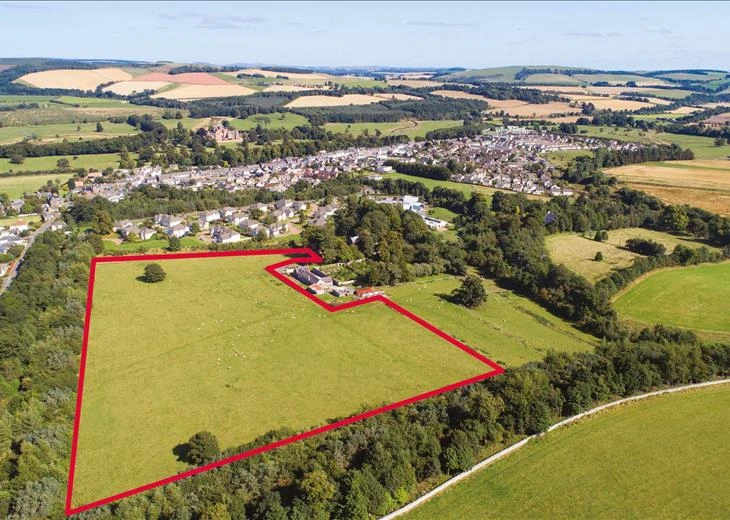
Land immediately adjoining a settlement can be particularly worth investigating because its physical relationship with the built-up area may be relevant to its planning prospects.
But there is an important difference between being close to a settlement and being suitable for development.
A site may be poorly related to the settlement because of a major road, railway, river, steep topography or other physical barrier. Conversely, a site that sits naturally alongside an existing built-up area may have a stronger relationship with the settlement.
The quality of the connection therefore matters, rather than simply measuring the distance from the site to the nearest houses.
What Should Landowners Check Before Considering Development?
If you own land outside a settlement and are considering its development potential, there are several questions worth investigating before assuming that the site is either suitable or unsuitable.
- Where is the site in relation to the nearest settlement?
- Is it inside or outside the settlement boundary?
- Is the land within the Green Belt or another protected designation?
- What does the adopted Local Plan say about the site and surrounding area?
- Does the council have an adequate five-year supply of deliverable housing sites?
- What is the council’s latest Housing Delivery Test position?
- Could the site be considered well related to an existing settlement?
- Can the site be accessed safely?
- Are utilities and other infrastructure available or capable of being provided?
- Are there flood risk, landscape, ecological, heritage or other environmental constraints?
- What scale of development could the location realistically accommodate?
These questions do not provide a planning decision, but they can help establish whether a site warrants more detailed investigation.
Does Land Outside a Settlement Have Development Potential?
It can.
The key point for landowners is that “outside the settlement” does not automatically mean “no development”.
The 2026 NPPF provides a framework under which certain development outside settlements can be acceptable, including specific circumstances involving housing and evidenced unmet need.
At the same time, development in the countryside remains subject to policies intended to promote sustainable patterns of development and protect environmental and landscape interests.
The most useful starting point is therefore to assess the site as a whole rather than relying on a single factor such as its position outside a settlement boundary.
Could your land outside a settlement have development potential?
Our free land assessment looks at your site’s location, planning history, surrounding development and local planning context to give you an honest view of whether the land is worth investigating for development.
Get a Free Land Assessment →Frequently Asked Questions
Can land outside a settlement be developed?
Yes. Land outside a settlement is not automatically prohibited from development. The 2026 NPPF identifies certain forms of development that can be acceptable outside settlements, while other proposals must satisfy the relevant planning requirements.
Can I build houses on land outside a settlement?
Possibly. Residential development outside settlements is subject to specific planning policies. In some circumstances, development that addresses an evidenced unmet need may be acceptable, provided the other relevant requirements are met. Being outside a settlement does not by itself make housing development acceptable.
Does being outside a settlement boundary mean my land cannot be developed?
No. A settlement boundary is an important planning consideration but is not an absolute prohibition on all development outside it. The applicable Local Plan, NPPF policies and characteristics of the site all need to be considered.
Does a lack of five-year housing supply help land outside a settlement?
It can be relevant. The 2026 NPPF identifies certain circumstances where an evidenced unmet need can support development outside settlements. A lack of five-year housing supply can be evidence of unmet need, but it does not by itself mean that a particular site is suitable for development.
Does a low Housing Delivery Test score help?
It can. Where housing delivery falls below 75% of the housing requirement over the previous three years, the NPPF states that an evidenced unmet need for housing is deemed to exist for the purpose of applying policy S5. Other planning requirements still need to be satisfied.
Can land outside a settlement be developed if it is Green Belt?
Green Belt land is subject to additional policies. The Green Belt provisions of the NPPF need to be considered rather than relying solely on the general policy for development outside settlements. Depending on the site, this can include consideration of Grey Belt and other Green Belt policies.
Is land next to a settlement more likely to be developed?
Not automatically. A site’s physical relationship with an existing settlement can be important, but access, infrastructure, landscape, environmental constraints and the overall pattern of development also need to be considered.
If you own land outside a settlement, don’t assume that its location alone determines its development potential. The planning position needs to be considered alongside the site’s physical characteristics and the wider local planning context.
Revive Estates Group provides free, no-obligation land assessments for landowners who want an honest initial view of whether their site has development potential and what options may be worth exploring.
Request Your Free Land Assessment →No cost. No obligation. Every enquiry is reviewed personally by our team.