
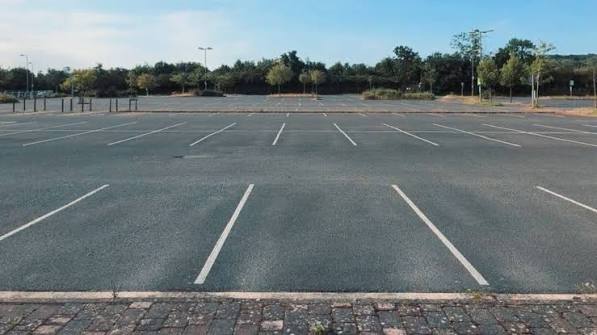
Yes, a car park or service yard can sometimes have development potential, particularly where it is underused, no longer required for its original purpose and located within or close to an established settlement. However, being hardstanding or previously developed land does not automatically mean that planning permission will be granted. The existing use, planning policy, access, highways, parking requirements, neighbouring uses, environmental constraints and the proposed redevelopment all need to be considered.
Car parks, service yards and areas of hardstanding are often overlooked as potential development sites.
A site may appear unremarkable because it is currently used for parking, storage, servicing or access. But if that use is no longer required, the land may potentially offer an opportunity for redevelopment.
This is particularly relevant where a car park or service yard sits within an established settlement, close to existing homes, services, employment or transport infrastructure.
The current National Planning Policy Framework specifically encourages the effective use of previously developed land and identifies the reuse of service yards, lock-ups and car parks that are no longer required as examples of opportunities that development plans should consider. It also gives substantial weight to making better use of vacant and underutilised land and buildings. :chatgpt-content-reference{index=”1″}
But this does not mean every car park or service yard should be built on.
Can a car park be developed for housing?
Potentially, yes.
An existing car park may sometimes be capable of redevelopment for housing or another suitable use.
Possible opportunities could include:
- redeveloping an underused private car park
- redeveloping a redundant commercial car park
- building on land formerly used for parking
- redeveloping a service yard behind commercial premises
- redeveloping a former delivery or storage area
- intensifying an existing commercial site
- combining a car park with adjoining land to create a larger development site.
Whether residential development is appropriate depends on the planning context of the particular site.
The fact that the land is already hardstanding or previously developed can be an advantage, but it does not create an automatic right to change its use.
What does the 2026 NPPF say about car parks and service yards?
The current NPPF has a particularly relevant policy framework for these types of sites.
Policy L1 says development plans should identify ways of accommodating as much development need as possible on previously developed land. It specifically includes opportunities such as the reuse of service yards, lock-ups, car parks and other transport infrastructure which are no longer required. :chatgpt-content-reference{index=”2″}
Policy L2 goes further by stating that substantial weight should be given to the benefits of proposals that make better use of vacant and underutilised land and buildings, including building on or above service yards, lock-ups, car parks and other transport infrastructure that are no longer required. :chatgpt-content-reference{index=”3″}
This is an important policy signal for landowners.
It does not mean that every car park is suitable for development, but it does mean that an underused or redundant site should not automatically be dismissed simply because it is currently used for parking or servicing.
Does a car park count as previously developed land?
It can.
The current NPPF definition of previously developed land includes land that has been lawfully developed and occupied by a permanent structure and associated fixed surface infrastructure. It also specifically includes land comprising large areas of lawfully developed fixed surface infrastructure such as large areas of hardstanding. :chatgpt-content-reference{index=”4″}
However, there are important exclusions from the definition.
For example, land in built-up areas such as residential gardens, parks, recreation grounds and allotments is excluded. The definition also contains other exclusions relating to agricultural or forestry buildings, restoration arrangements and sites where previous structures have blended into the landscape. :chatgpt-content-reference{index=”5″}
Therefore, it is important to establish whether a particular car park or service yard genuinely meets the NPPF definition rather than simply describing any hardstanding as “brownfield”.
Does previously developed land automatically get planning permission?
No.
This is one of the most important points for landowners.
Previously developed land can benefit from national planning policy support, but it still has to be suitable for the proposed development.
The planning authority may consider:
- the site’s location
- the development plan
- the proposed use
- access and highways
- design
- neighbouring properties and uses
- flood risk
- drainage
- contamination
- ecology
- heritage
- infrastructure
- the loss of an existing commercial or operational use.
The planning system is still plan-led, and applications must be considered against the development plan and other material considerations.
What if the car park is still being used?
This is an important distinction.
There is a significant difference between:
- a genuinely redundant car park
- an underused car park
- a car park that is required for an existing business
- a car park that provides essential parking for customers or staff.
If a car park remains important to an operating business, redevelopment could create a planning objection because the proposal may result in the loss of necessary parking or affect the viability and operation of the existing use.
The NPPF recognises this issue. Current transport policy says a flexible approach to parking standards should be taken when reconfiguring retail or other sites that attract large numbers of customers where better use of previously developed land is proposed, but there should be evidence where spaces need to be retained to meet specific operational and commercial requirements. :chatgpt-content-reference{index=”6″}
Therefore, the question should not simply be “Is this car park large enough to build on?”
It should also be:
“Is the existing parking actually required, and what would happen if it were removed or reduced?”
Can a service yard be developed?
Potentially.
A service yard can sometimes be an attractive redevelopment opportunity where it is underused or no longer required for the original business.
Examples might include:
- a former delivery yard
- a redundant storage yard
- a yard behind a shop
- a former commercial servicing area
- an underused business yard
- a yard associated with a business that has relocated or changed its operation.
The current NPPF specifically identifies the reuse of service yards as an opportunity for more effective use of previously developed land. :chatgpt-content-reference{index=”7″}
However, the existing use still needs to be understood.
A service yard may be essential for deliveries, refuse collection, loading, emergency access or the day-to-day operation of a business.
Redevelopment could therefore require a different access or servicing arrangement.
Could a car park or service yard be used for housing?
Possibly, but the proposed use matters.
A site might potentially be suitable for:
- housing
- commercial development
- mixed-use development
- employment space
- community uses
- another use supported by local planning policy.
Residential development may be attractive because of housing demand, but it is not automatically the correct planning use.
For example, a site within an established employment area could be subject to policies designed to protect employment land.
Similarly, a site within or near a town centre may have a different planning context from an isolated commercial yard.
Where is a car park or service yard most likely to have potential?
There is no single rule, but certain characteristics can make a site more interesting for investigation.
These may include:
- being within an established settlement
- being surrounded by existing development
- being close to shops and services
- having good access to public transport
- having suitable highway access
- being underused or genuinely redundant
- having an established lawful use
- having relatively few physical constraints
- being located where planning policy supports additional development.
The current NPPF’s sustainable-development policies seek to maximise the potential for growth on suitable land within settlements, while limiting development away from settlements where this would harm the countryside. :chatgpt-content-reference{index=”8″}
Can a car park outside a settlement be developed?
It can sometimes be possible, but the planning context can be very different.
Outside settlements, additional development can face greater policy constraints, particularly where it would result in an unsustainable pattern of development or harm the countryside.
An existing hardstanding area does not automatically overcome those issues.
The site’s relationship with nearby settlements, accessibility, existing use, planning history and relevant local policies all need to be considered.
What planning issues affect car park redevelopment?
1. Loss of parking
If the car park serves an existing business, the planning authority may need to understand whether sufficient parking remains.
Current NPPF transport policy requires parking standards to reflect the location and nature of development and recognises the need to retain parking where specific operational and commercial requirements justify it. :chatgpt-content-reference{index=”9″}
2. Access
A new development will need an appropriate means of access.
The existing entrance may not be suitable for the proposed use, particularly if several homes are being created.
3. Highway safety
Traffic movements, visibility, pedestrian safety and the effect of development on the surrounding highway network can all be relevant.
4. Design and layout
A car park is often a relatively open and functional space. Turning that space into a successful development requires a suitable layout, building arrangement, landscaping, parking and access.
The NPPF requires development to create high-quality, sustainable and well-designed places rather than simply filling every available part of a site. :chatgpt-content-reference{index=”10″}
5. Drainage
Large areas of hardstanding can generate surface-water runoff.
Redevelopment therefore provides an opportunity to consider sustainable drainage, but drainage capacity and flood risk still need to be investigated.
6. Contamination
Some former commercial, industrial or servicing sites may have a history that requires investigation.
Potential contamination can affect both planning and development costs.
7. Existing leases and rights
A landowner may not have complete freedom to redevelop a car park or service yard.
Leases, easements, rights of way, access rights, covenants and other legal interests may affect what can be done with the land.
8. Existing commercial use
If the land forms part of an operating business, redevelopment could affect employment, servicing, deliveries or the continued operation of the business.
This can make the planning assessment more complicated than simply redeveloping an unused piece of land.
What if the car park is no longer needed?
This can be an important opportunity.
The current NPPF specifically identifies car parks and service yards that are no longer required as examples of previously developed land that could potentially be reused more effectively. :chatgpt-content-reference{index=”11″}
For a landowner, evidence that the existing use is genuinely redundant can therefore be important.
This might arise where:
- a business has closed
- a business has relocated
- the business has reduced its operations
- parking demand has materially changed
- an alternative parking arrangement is available
- a site has become surplus to operational requirements.
However, “not used very often” is not necessarily the same as “no longer required”.
Could a car park be developed without replacing all the parking?
Possibly.
Some redevelopment proposals may retain part of the existing parking while using the remainder of the site for new development.
This could be particularly relevant where:
- the existing parking is larger than operational requirements
- parking demand can be accommodated more efficiently
- part of the site can be redeveloped without affecting the business
- alternative transport options reduce parking requirements
- the development plan supports more efficient use of the site.
But the appropriate balance needs to be demonstrated rather than assumed.
Could a service yard be converted into a residential development site?
Potentially, particularly where the yard is genuinely redundant and located within an appropriate settlement.
For example, a former commercial yard surrounded by housing may warrant investigation if it has:
- good highway access
- a suitable relationship with surrounding development
- no overriding policy objection
- limited environmental constraints
- sufficient space for a well-designed scheme.
However, the previous commercial use may also create issues such as contamination, noise, servicing or neighbouring land-use conflicts.
The proposed development therefore needs to be assessed on its own merits.
Does brownfield status make development easier?
It can provide a policy advantage, but it is not a guarantee.
The NPPF places strong emphasis on making effective use of previously developed land, particularly within settlements. Policy L2 gives substantial weight to proposals that make better use of vacant and underutilised land and buildings. :chatgpt-content-reference{index=”12″}
But the site still needs to be suitable for the proposed development.
Brownfield status should therefore be viewed as one part of the planning case, rather than a guarantee of permission.
Could redevelopment increase the value of the land?
Potentially.
A redundant car park or service yard may have limited value in its existing use but potentially greater value if it can support an alternative development.
However, development value depends on what can actually be achieved.
A developer may consider:
- the number of homes or amount of commercial floorspace
- the expected value of the completed development
- construction costs
- professional fees
- planning obligations
- infrastructure requirements
- abnormal costs
- finance costs
- planning risk
- developer return.
This means it is not sensible to value a redundant car park simply by applying a generic price per acre or assuming that all brownfield land has the same development value.
What should a landowner check before marketing a car park for development?
Before assuming that a car park or service yard is a development opportunity, it is worth checking:
- What is the lawful existing use?
- Is the land genuinely underused or redundant?
- Does it meet the NPPF definition of previously developed land?
- What does the Local Plan say?
- Is the site within a settlement?
- Is residential development supported in principle?
- Is the existing parking required?
- Is the service yard required for deliveries or servicing?
- Can the site be accessed safely?
- Are there contamination or drainage issues?
- Are there trees, ecology or heritage constraints?
- Are there leases, covenants or other legal restrictions?
- What level of development could realistically fit on the site?
- Would the development be commercially viable?
Could your car park or service yard have development potential?
If you own a car park, service yard, commercial hardstanding or other underused site, it may be worth investigating whether the land could be put to a more valuable use.
The current planning framework makes the effective use of previously developed and underutilised land an important consideration, particularly where sites are within established settlements.
At Revive Estates Group, we can assess land from a planning and development perspective and help identify whether a site may have potential for redevelopment.
Could Your Car Park or Service Yard Have Development Potential?
If you own an underused car park, service yard or commercial site and want an initial view of its development potential, you can request a free land assessment.
Request a Free Land AssessmentFrequently Asked Questions
Can a car park be developed for housing?
Potentially. An underused or redundant car park can sometimes be redeveloped for housing, particularly where it is within an appropriate settlement and the proposed development satisfies planning, access, design and other requirements.
Can a service yard be developed?
Potentially. A redundant service yard may provide a development opportunity, but the planning authority will consider its existing use, whether it is still required, access, surrounding uses, planning policy and the suitability of the proposed redevelopment.
Does a car park count as previously developed land?
It can. The current NPPF definition includes large areas of lawfully developed fixed surface infrastructure such as hardstanding, although there are important exclusions and the whole site should not automatically be assumed to qualify.
Does brownfield land automatically get planning permission?
No. Previously developed land can benefit from national planning policy support, but planning permission still depends on the proposed development, the development plan and site-specific considerations.
Can I build on a car park that is still being used?
Possibly, but the existing use needs to be considered. If the parking is required for an operating business, the loss of spaces may create planning or operational issues. Evidence may be needed to demonstrate that the existing parking is no longer required or that an appropriate alternative can be provided.
Can a commercial service yard be converted to housing?
It can sometimes be possible, particularly where the yard is redundant and located within an appropriate settlement. However, employment policies, access, contamination, servicing, neighbouring uses and the proposed residential scheme all need to be considered.
Does the 2026 NPPF support redevelopment of car parks?
Yes. Current NPPF policy L1 specifically identifies the reuse of service yards, lock-ups, car parks and other transport infrastructure that are no longer required as examples of opportunities to make more effective use of previously developed land. Policy L2 also gives substantial weight to making better use of vacant and underutilised land and buildings.
Could redeveloping a car park increase its value?
Potentially. If the site has credible development potential, that opportunity can affect its value. However, the value depends on what can realistically be developed, planning risk, development costs, market demand and the time required to achieve the development.
Can Revive Estates Group assess a car park or service yard?
Yes. Revive Estates Group can provide an initial assessment of a site to help establish whether it may have redevelopment potential and what planning considerations may need further investigation.
Want to discuss your land?
If you own a car park, service yard or other underused commercial site and believe it may have development potential, contact Revive Estates Group.