
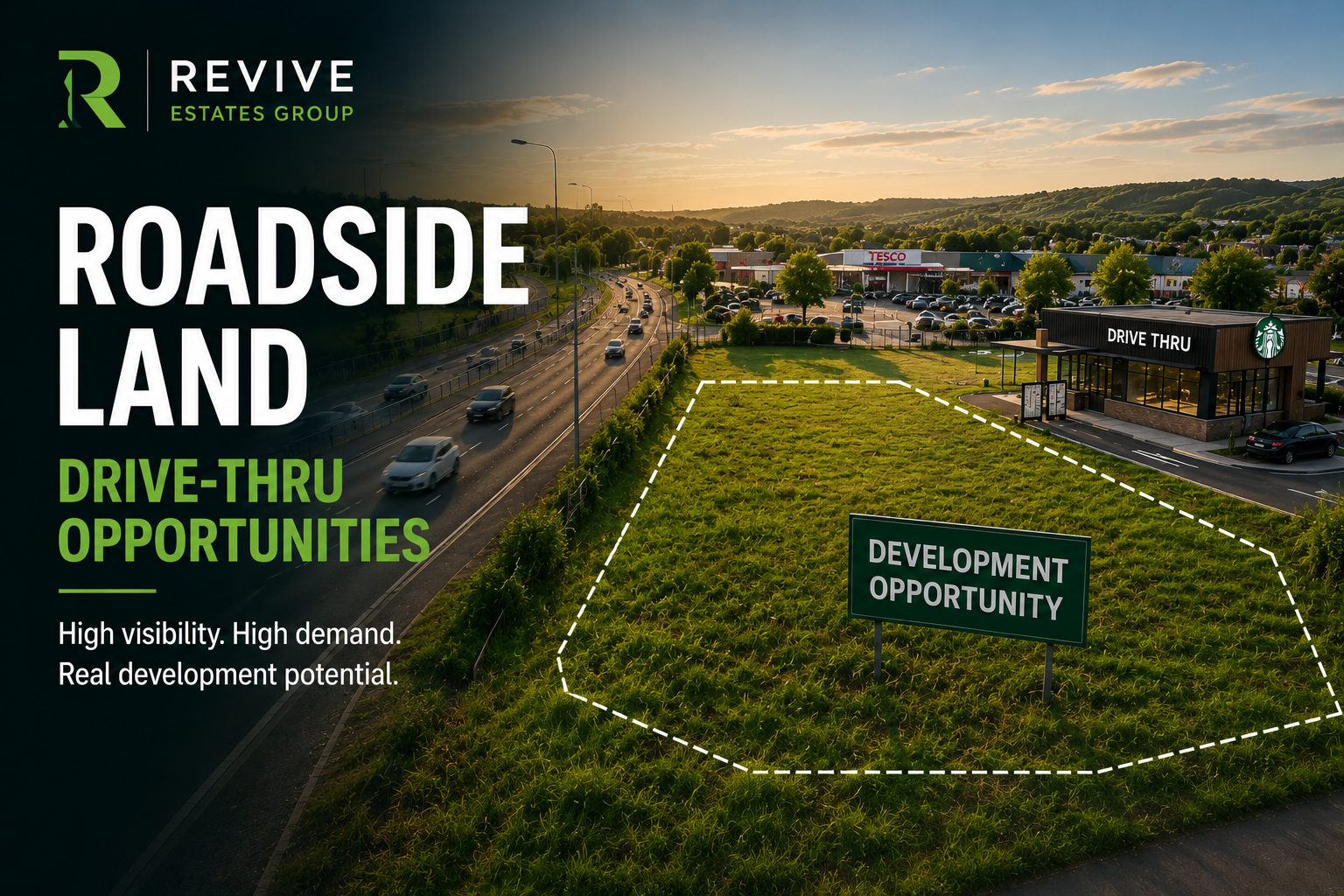
Could Your Roadside Land Have Development Potential?
Roadside land can offer development opportunities that are very different from conventional development sites. Land positioned alongside busy roads, junctions and established routes can sometimes have potential for commercial, roadside and other forms of development, particularly where there is good visibility, suitable access and a viable planning case.
At Revive Estates Group, we help landowners understand whether their roadside site may have development potential, what planning considerations could apply and which route may offer the best opportunity to maximise its value.
REQUEST YOUR FREE LAND ASSESSMENT →What Types Of Roadside Land Can Be Developed?
Roadside land development opportunities can take many forms. If you own land alongside a busy road, near a junction or with strong road visibility, its location may create development or commercial potential that is not immediately obvious from its current use. We assess a range of roadside sites to understand whether their position, visibility, access and surrounding uses could support an alternative use or development opportunity.
Prominent Road Frontage
Land with strong visibility from busy roads can sometimes be attractive for roadside development, commercial or other uses, subject to planning, access and highway considerations.
Junction & Corner Sites
Land positioned near significant junctions, roundabouts or established routes may offer opportunities where visibility and accessibility are particularly important.
Drive-Thru Opportunities
Sites with suitable access, visibility and sufficient scale may be worth investigating for drive-thru or roadside food and beverage uses.
Existing Commercial Land
Underused commercial plots, yards and premises with good road exposure may have potential for redevelopment, intensification or an alternative commercial use.
Service & Trade Locations
Land close to established transport routes may be suitable for certain service, trade or vehicle-related uses, depending on local planning policy and highway requirements.
Surplus & Underused Roadside Land
Small or irregular parcels that appear difficult to use conventionally may still be worth assessing where their location and roadside exposure create a potential opportunity.
Visibility alone isn't enough.
A prominent roadside position can be valuable, but access, highway safety, planning policy, neighbouring uses, site size and the suitability of the proposed use all need to be considered before development potential can be established.
Why Is Roadside Land Attractive for Development?
If you own land alongside a busy road, its location may give it development or commercial potential that is not immediately apparent from its current use. Visibility, passing traffic, accessibility and proximity to established routes can all make certain roadside sites attractive for particular uses, although planning, highway and site-specific considerations will ultimately determine what may be possible.
High Visibility
Land with prominent frontage to a busy road can provide valuable visibility for businesses that depend on passing traffic and strong exposure.
Passing Traffic
High traffic flows can make certain roadside locations attractive for uses designed to serve passing motorists and nearby communities.
Strategic Accessibility
Sites close to established routes can offer convenient access for customers, employees, deliveries or other commercial activity, subject to highway requirements.
Commercial Potential
Roadside locations can sometimes be suitable for commercial, service, food and beverage or vehicle-related uses where the planning and site characteristics support them.
Existing Roadside Uses
Sites already associated with commercial or roadside activity may provide a useful starting point when considering intensification, redevelopment or an alternative use.
A busy road does not automatically make land developable. Highway safety, access, planning policy, environmental constraints, neighbouring uses and the suitability of the proposed development all need to be assessed.
What Planning Factors Can Affect Roadside Development?
If you own roadside land, its visibility and location may appear attractive for development, but planning permission will depend on much more than the site's position beside a busy road. Highway access, planning policy, traffic, environmental constraints and the relationship between the proposed use and the surrounding area can all affect what may realistically be possible.
Highway Access
The ability to safely enter and leave the site is one of the most important considerations. Existing access arrangements and any proposed changes may need to be assessed with the relevant highway authority.
Visibility & Highway Safety
Visibility at site entrances, road geometry and the impact of additional vehicle movements can all influence whether a roadside proposal is acceptable.
Traffic Generation
Different commercial uses can generate very different levels and patterns of traffic. The proposed use therefore needs to be considered alongside the capacity and characteristics of the surrounding road network.
Planning Policy
Local planning policies, land allocations and the surrounding planning context can determine which types of development may be appropriate for the site. The location of the land and the planning policies applying to it should therefore be understood before assuming that a roadside opportunity is developable.
Drainage & Flood Risk
Surface water drainage, flood risk and the amount of hardstanding proposed can affect both the design and planning suitability of a roadside development.
Landscape & Visual Impact
Development beside a prominent route can have a visible impact on the surrounding landscape. Building scale, layout, landscaping and lighting may therefore need careful consideration.
Signage & Lighting
Commercial roadside uses may require signage and lighting, but these can themselves require planning consideration and need to be appropriate to the location.
Surrounding Uses
Nearby homes, businesses, protected areas and other sensitive uses can influence whether a particular roadside development is suitable.
Roadside visibility is only one part of the opportunity. A successful assessment needs to consider the proposed use, access, highway safety, planning policy and the wider characteristics of the site together.
What Could Your Roadside Land Be Worth?
Roadside land does not have a standard value simply because it is next to a busy road. Its value can vary significantly depending on what the site could realistically be used for and whether there is a viable planning opportunity.
A prominent location, good access and strong passing trade may make a site attractive for certain commercial uses, while planning policy, highway requirements, constraints and development costs can all affect what a developer or operator may be prepared to pay.
If you own roadside land, understanding its potential before selling can help you establish whether you are looking at an existing-use value or whether the site could be worth considerably more if a development or alternative commercial opportunity can be identified.
Factors That Can Influence Value
Location & Road Exposure
The road, junction, surrounding settlement and level of exposure can all influence the site's attractiveness to potential occupiers or developers.
Traffic & Passing Trade
Traffic flows and the type of traffic using the route can be particularly relevant to certain roadside commercial uses.
Access & Highway Position
The ability to provide safe and suitable access can have a significant impact on what development may be achievable.
Development Potential
The scale, type and intensity of development that may be appropriate can directly influence the underlying land value.
Market Demand
Demand from operators, businesses and developers for suitable roadside locations can influence the attractiveness of the opportunity.
Roadside visibility can create value, but planning potential creates the opportunity. The strongest assessment considers the site's location, access, planning position, constraints and realistic end use together.
What Can You Do With Roadside Land?
If your roadside land appears to have development or commercial potential, you do not necessarily have to sell it immediately. There may be several routes forward, depending on the site's potential, planning position, your timescale and what you want to achieve from the land.
Explore the Planning Potential
The first step may be to investigate what could realistically be developed on the site. Understanding the planning position, potential uses, access and constraints can help establish whether there is a genuine opportunity worth pursuing.
Promote the Land
Where a site has sufficient potential, land promotion can provide a route to pursue planning permission and subsequently market the site to potential developers or other buyers.
Introduce the Site to Potential Buyers
If the site is suitable for a particular commercial, roadside or development use, it may be possible to introduce the opportunity to relevant developers, operators or other potential buyers.
Consider an Option Agreement
Depending on the circumstances, an option agreement can provide a route for a developer to secure the opportunity to purchase the land while planning or other conditions are progressed under agreed terms. Independent legal advice should always be taken before entering into an agreement.
Sell & Dispose of the Land
If you prefer certainty or the site is already in a suitable position for sale, the land can be marketed to appropriate buyers. The way the opportunity is presented and the buyers targeted can influence the outcome.
Could Your Roadside Site Be Worth Exploring?
If you own roadside land, a prominent plot, commercial site or underused parcel with good road exposure, Revive Estates Group can provide an initial assessment of its potential.
We can help you understand whether the site's location, access and characteristics appear suitable for further investigation and what options may be available.
REQUEST YOUR FREE LAND ASSESSMENT →Frequently Asked Questions
Some of the most common questions landowners ask when considering whether roadside land may have development or commercial potential.
Potential opportunities can include prominent road frontage, junction sites, commercial plots, yards, underused roadside land and sites that may be suitable for particular roadside uses. Each site needs to be assessed individually, taking account of planning, access and other site-specific considerations.
No. A prominent location can be an advantage, but being next to a busy road does not automatically create a planning opportunity. Planning policy, highway access, visibility, traffic generation, environmental constraints and the proposed use all need to be considered.
Depending on the location and planning context, roadside sites can sometimes be suitable for commercial, food and beverage, drive-thru, vehicle-related, service or other uses that benefit from visibility and accessibility. The appropriate use will depend on the individual site and planning circumstances.
Some roadside sites may be suitable for drive-thru uses, but this depends on factors such as site size, access, highway safety, traffic movements, planning policy and the surrounding area. A site-specific assessment is needed before assuming a drive-thru opportunity exists.
Access can be one of the most important considerations. The safety and suitability of vehicle movements to and from the site can have a significant influence on what development may be possible. Highway requirements should therefore be considered at an early stage.
There is no standard value for roadside land. The amount a buyer or developer may be prepared to pay can depend on location, visibility, traffic flows, access, planning prospects, development capacity, market demand and the type of use that could realistically be achieved.
There is no single answer. Depending on the site, it may be appropriate to sell the land as it stands, investigate its planning potential first, promote the opportunity or explore a developer arrangement. The best route depends on the site's potential, your objectives, timescale and willingness to take planning risk.
Yes. Roadside land can be sold without planning permission, although if the site has realistic development or commercial potential, it may be worth understanding that potential before agreeing to a sale. Depending on the circumstances, investigating planning, promoting the land or approaching suitable buyers may provide alternative routes.
Yes. Revive Estates Group offers a free initial land assessment to help establish whether your roadside land or property may have development potential and whether it is worth investigating further. The assessment can also help identify potential routes forward based on the site's circumstances and your objectives.