
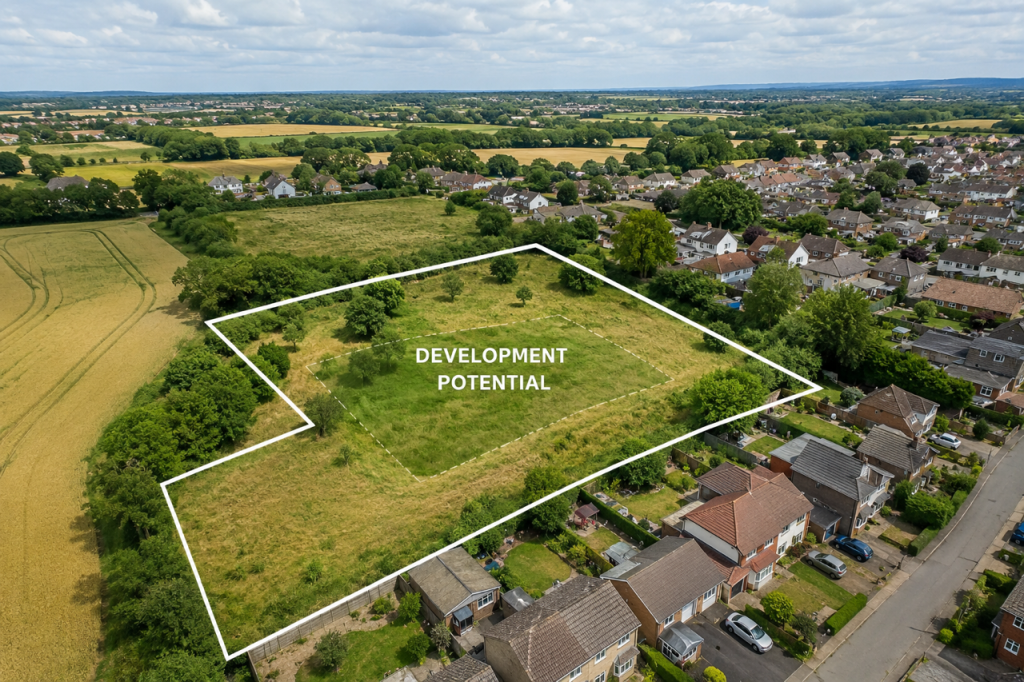
Does My Land Have Development Potential?
If you own land, a large garden, unused commercial space, or agricultural land, you may be sitting on a valuable development opportunity without realising it.
Land with development potential can be worth significantly more than standard market value — especially if it is located near existing housing, transport links, schools, or expanding towns and villages.
In this guide, we explain the key signs that land may be suitable for development, what developers look for, and how to assess whether your property could have hidden value.
The short answer
Many landowners are sitting on development potential they don’t know about. Location, proximity to existing housing, access, and local planning policy are the key factors — but the only reliable way to know is a site-specific assessment. Ours is free, takes 2 minutes, and gives you an honest answer with no obligation to proceed.
What Does “Development Potential” Mean?
Development potential refers to whether land could realistically receive planning permission for:
- New homes
- Small housing developments
- Commercial buildings
- Barn conversions
- Change of use projects
- Garden plot developments
- Mixed-use schemes
Even land without planning permission can still carry “hope value” if there is a reasonable chance of future development approval. If you’re unsure whether your garden may have development potential, our Free Land Assessment service can provide an initial review.
Common Types Of Land With Development Potential
Residential Gardens
Large side gardens, back gardens, or corner plots can sometimes accommodate:
- A single building plot
- Semi-detached homes
- Small infill developments
This is increasingly common in villages and commuter locations where housing demand is high.
Agricultural Land
Some agricultural land near settlements may have long-term development potential if:
- It borders existing housing
- The local authority needs additional housing supply
- Nearby infrastructure is expanding
Redundant Commercial Land
Unused yards, workshops, pubs, offices, and storage sites are often attractive to developers looking for conversion or redevelopment opportunities.
Brownfield Sites
Previously developed land is often prioritised by planning authorities because it can reduce pressure on greenfield sites.
7 Signs Your Land May Have Development Potential
1. Your Land Is Near Existing Housing
Developers and planning authorities typically favour land adjacent to existing residential areas.
If houses have already been built nearby, your land may be considered a logical extension.
2. The Area Needs More Housing
Councils across the UK continue to face pressure to increase housing supply.
Areas with housing shortages may be more open to:
- Infill development
- Small site schemes
- Rural exception sites
- Sustainable village growth
3. Nearby Developments Have Been Approved
One of the strongest indicators is recent planning approvals nearby.
If neighbouring land has received permission, this can strengthen the case for future development.
4. Your Plot Has Road Access
Safe and practical access is one of the most important planning considerations.
Land with:
- Existing driveways
- Road frontage
- Good visibility
- Utility connections
is often more attractive to developers.
5. The Plot Is Larger Than Average
Oversized gardens and underused land may provide enough space for:
- Additional dwellings
- Plot splits
- Small housing schemes
Even a single extra building plot can substantially increase land value.
6. The Site Is Near Transport And Amenities
Land close to:
- Train stations
- Schools
- Shops
- Employment centres
- Bus routes
is generally more appealing from a planning perspective.
7. The Land Is Not Heavily Restricted
Certain restrictions can affect development potential, including:
- Green Belt designation
- Flood zones
- Conservation areas
- Listed buildings
- Protected habitats
However, restrictions do not automatically prevent development. Many successful schemes are approved on constrained sites with the right planning strategy.
Recognise any of these signs in your land?
If one or more of the above applies to your land, it’s worth finding out more. Our free assessment reviews your site’s location, planning position and characteristics and gives you an honest view of whether development potential exists — with no cost and no obligation.
Find Out If My Land Has Potential →How Developers Assess Land
Developers typically evaluate:
- Location
- Planning policy
- Access
- Site size
- Local housing demand
- Comparable land values
- Build costs
- Profit margins
A professional land assessment can identify opportunities that are not obvious to landowners. If you’re unsure whether your garden may have development potential, our Free Land Assessment service can provide an initial review.
How Much More Valuable Is Land With Planning Permission?
Land values can increase dramatically once planning permission is secured.
In some cases:
- Agricultural land may rise several times in value
- Garden plots can become valuable building sites
- Commercial land can achieve significant uplift
The exact increase depends on:
- Location
- Number of units possible
- Planning risk
- Market demand
What Should You Do If You Think Your Land Has Potential?
If you believe your land may have development potential, the next steps are usually:
- Review local planning policy
- Check nearby planning applications
- Assess site constraints
- Obtain a professional land appraisal
- Explore promotion or development options
Many landowners choose to seek advice before approaching developers directly to avoid undervaluing the opportunity.
Skip straight to step 4 — get your free land appraisal today.
Rather than working through the steps above yourself, our team can do it for you. We review your land’s location, local planning policy, access, site constraints and comparable values — and give you a clear, honest picture of whether your land has development potential worth exploring.
There’s no cost, no jargon, and no pressure to proceed. Just an independent assessment you can rely on.
Get My Free Land Assessment →Takes 2 minutes · No cost · No obligation · Reviewed personally by our team
Frequently Asked Questions
Can I Develop Part Of My Garden?
In many cases, yes. Large gardens can sometimes accommodate one or more additional dwellings, subject to planning permission. For more detail read A Guide to Garden Development Potential in the UK
Does Agricultural Land Have Development Value?
Agricultural land can carry significant hope value if it is near existing settlements or future growth areas.
Can Green Belt Land Be Developed?
Some Green Belt sites can still receive planning permission under specific circumstances, although the process is usually more complex.
Do I Need Planning Permission Before Selling Land?
Not always. Some landowners sell without planning permission, while others use promotion agreements to maximise value first.
What Is Hope Value?
Hope value refers to the additional value attached to land because of the possibility of future development approval.
Whether you own a large garden, agricultural land, a redundant commercial building, or brownfield land — our team can assess whether your property may have development potential and explain what the best route forward might look like.
Our assessment is completely free, takes just a couple of minutes, and comes with no obligation to proceed. We’ll give you an honest view — not a sales pitch.
Request Your Free Land Assessment →No cost. No obligation. Every enquiry is reviewed personally by our team — we’ll tell you honestly whether your land has potential worth exploring.