
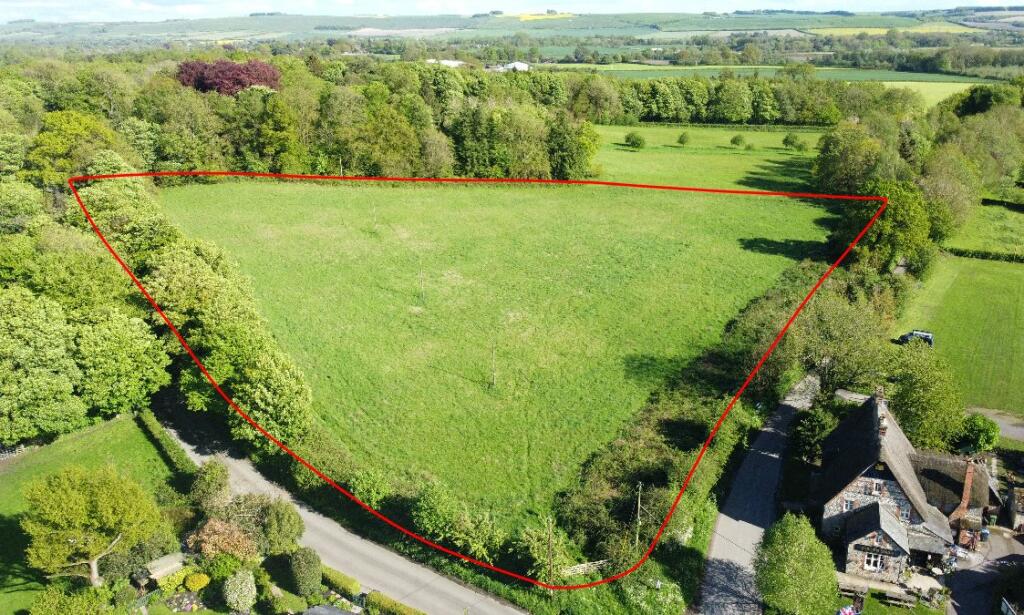
There is no standard value for development land per acre in the UK. An acre of development land could be worth very different amounts depending on what can be built, the local value of the completed development, the planning position, development costs, infrastructure, planning obligations and the level of risk involved. The most meaningful way to assess development land is therefore to consider what the site could realistically deliver, rather than simply applying a national price per acre.
If you own land with development potential, one of the first questions you may ask is: how much is development land worth per acre?
It is an understandable question because land is often discussed in terms of a price per acre. However, development land is very different from a straightforward agricultural or recreational land transaction.
The value of a development site is closely connected to what can realistically be developed on it, what those completed properties could be worth and how much it will cost to bring the scheme forward.
This means that two sites containing exactly the same amount of land can have completely different values.
There Is No Standard Price Per Acre for Development Land
There is no single UK-wide figure that can reliably tell a landowner what an acre of development land is worth.
Government guidance on development appraisal explains that land value can be assessed through a residual approach. In simple terms, the value remaining for the land is influenced by the value of the completed development after the costs and required return associated with delivering it have been taken into account.
This is why quoting a national average price per acre can be misleading when considering a particular site.
A one-acre site in a location where several high-value homes could potentially be built may have a very different development value from a one-acre site where only a single dwelling may be realistically achievable.
Why Development Land Cannot Be Valued From Acreage Alone
The amount of land is only one part of the equation.
When considering development land value per acre, the important question is not simply how many acres are available. It is what those acres can potentially deliver.
Factors that can materially affect the value include:
- the planning position of the site;
- the number and type of properties that may be achievable;
- the value of completed properties in the local market;
- access and highway considerations;
- availability of utilities and infrastructure;
- planning obligations and contributions;
- abnormal development costs;
- professional, finance and construction costs;
- the time and risk involved in securing planning and delivering the scheme; and
- current demand from developers and purchasers.
As a result, the same price per acre cannot simply be applied to every development opportunity.
How Developers Work Out What Development Land Is Worth
A common approach to assessing land with development potential is a residual valuation. The basic principle is relatively straightforward: estimate the value of the completed development and deduct the costs and return required to deliver it.
The amount remaining represents the residual land value within that particular development appraisal.
Gross Development Value
The starting point is usually the potential value of the completed development. This is commonly referred to as Gross Development Value (GDV).
For a residential scheme, this could include the expected sales value of the homes once completed. The local housing market is therefore an important part of understanding the potential value of a site.
Development Costs
The potential sales value is not the same as the value of the land.
A development may involve construction costs, professional fees, planning costs, infrastructure, finance, marketing, planning obligations and potentially significant abnormal costs.
All of these can reduce the amount available for the land.
Developer Return
A developer will also generally need to account for an appropriate return for taking on the financial and planning risks associated with the project.
The level of return can vary depending on the type of scheme, its complexity and the risks involved.
Residual Land Value
In simplified terms, the calculation can be expressed as:
This is an intentionally simplified explanation. Real development appraisals can contain many additional assumptions and variables.
Government guidance also makes clear that the reliability of an appraisal depends on the quality of the inputs used.
What Can Change the Value of Development Land Per Acre?
Several factors can cause the value of one development site to differ substantially from another.
Planning Position
A site with an implemented planning permission is different from land where development is only a possibility. Land with an existing permission may have greater certainty, although the value will still depend on exactly what has been approved and whether the permission produces an economically viable scheme.
For more information, see our guide: How Much Does Planning Permission Add to Land Value?
Development Capacity
Two one-acre sites may not have the same development capacity.
Layout, access, site shape, neighbouring uses, environmental constraints and planning policy can all influence how much development can realistically be accommodated.
Location
The value of completed development varies considerably between locations.
This means that the potential sales value of a scheme is an important part of understanding what the underlying land may be worth.
Access and Infrastructure
A site may have development potential but still require substantial investment in access, drainage, utilities or other infrastructure.
Where these costs are significant, they can have a direct effect on the amount a developer can justify paying for the land.
Planning Obligations
Depending on the scale and nature of a development, planning obligations and other contributions can form part of the development costs.
These costs need to be considered when assessing the residual value of a site.
Abnormal Costs
Some sites have costs that would not arise, or would be less significant, on a straightforward development site.
Examples can include difficult ground conditions, contamination, unusual access requirements, flood-related measures or substantial infrastructure works.
Market Conditions
Development land values are also affected by market conditions, including demand for completed property, construction costs, finance costs and the availability of developers willing to acquire and promote particular types of site.
Why Two One-Acre Sites Can Have Completely Different Values
Consider two hypothetical one-acre sites.
Site A may have good access, established services nearby, a planning permission for several homes and strong local property values.
Site B may also contain one acre but have uncertain access, infrastructure requirements, planning constraints and a much lower potential development capacity.
Treating both sites as having the same price per acre would therefore ignore some of the factors that actually create their value.
This is why a landowner should be cautious about relying on a headline figure for development land prices without understanding the assumptions behind it.
Is Development Land Worth More With Planning Permission?
Planning permission can increase the value of land because it can provide greater certainty about what can be developed. However, there is no fixed percentage or automatic uplift that applies to every site.
The effect depends on what has been permitted, the economics of the proposed development, development costs, local property values and the risks that remain.
For a more detailed explanation, read: How Much Does Planning Permission Add to Land Value?
How Much Is Strategic Land Worth Per Acre?
Strategic land is another example of why a simple price-per-acre approach can be misleading.
Strategic land is generally land where development may be achievable in the future but where planning and promotion work may still be required.
Its value can therefore depend on factors such as location, planning prospects, development capacity, infrastructure requirements, policy context and the likelihood of securing a viable scheme.
You can read more about this in our guide to Strategic Land Development Opportunities .
What Could Your Land Be Worth?
Development land cannot be reliably valued from acreage alone. Our free land assessment provides an initial view of your site’s location, planning position and development potential.
Get My Free Land Assessment →How Can I Find Out What My Land Could Be Worth?
If you are trying to understand the potential value of land, the starting point should be the characteristics of the particular site rather than a generic national price per acre.
Relevant questions include:
- What is the current planning position?
- What type and scale of development might realistically be possible?
- What evidence exists for local property values?
- Are there access or infrastructure constraints?
- What planning obligations or abnormal costs may arise?
- What level of planning and development risk remains?
Looking at these factors together gives a much more meaningful picture of potential land value than simply multiplying the acreage by an assumed price per acre.
If you would like an initial assessment of your site’s potential, you can request a free land assessment from Revive Estates Group .
Frequently Asked Questions
How much is development land worth per acre?
There is no standard UK price per acre for development land. Value depends on factors including planning position, development capacity, location, completed property values, development costs, infrastructure, planning obligations and risk.
Is there a standard price for development land?
No. A generic price per acre should not be treated as a valuation for a particular development site. Site-specific factors can cause substantial differences in value.
How do developers value land?
Developers may use development appraisals, including residual valuation, to assess what the land can support financially. This involves considering the value of the completed development and deducting development costs and the return required for undertaking the project.
Does planning permission increase the price per acre?
Planning permission can increase land value by providing greater certainty about development, but there is no fixed percentage increase that applies to every site. The effect depends on the permission and the economics of the resulting development.
Is development land worth more than agricultural land?
Land with realistic development potential can have a substantially different value from land valued primarily for agricultural use. However, development potential must be realistic and supported by planning circumstances and an economically viable development proposition.
How is residual land value calculated?
In simplified terms, residual land value is the value of the completed development less the costs of delivering it and the return required by the developer. Actual appraisals can contain considerably more detailed assumptions.
Can two sites of the same size have different values?
Yes. Two one-acre sites can have very different values because of differences in planning, development capacity, location, access, infrastructure, development costs and the value of the completed scheme.
How can I find out what my development land is worth?
A site-specific assessment is generally more useful than relying on a generic price per acre. The assessment should consider the site’s planning position, potential development, local values, costs, constraints and the risks associated with bringing the opportunity forward.
Related Landowner Guides
- How Much Does Planning Permission Add to Land Value?
- How Much Is My Land Worth to a Developer?
- Does My Land Have Development Potential?
- Strategic Land Development Opportunities
Have a Question About Your Land?
If you’re unsure how the information applies to your particular site, contact Revive Estates Group for assistance.
Contact Us →