
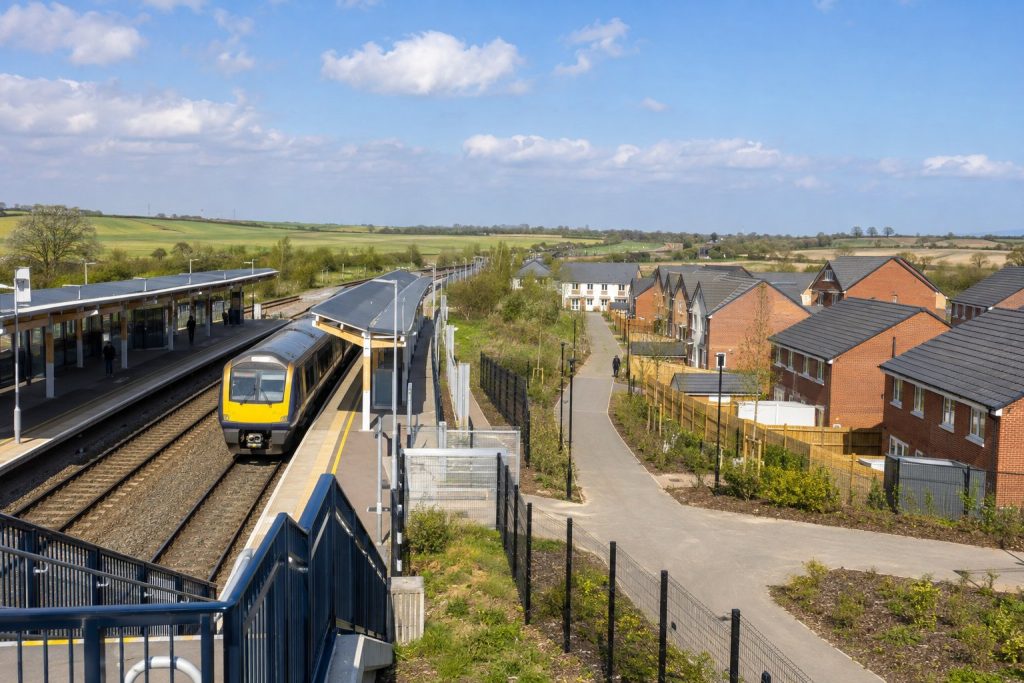
The short answer
Yes, land near a railway station can have development potential, and the 2026 National Planning Policy Framework (NPPF) gives specific support to station-led development in appropriate locations. However, being near a station does not automatically mean that land can be developed. The current policy focuses on well-connected stations, sustainable locations, housing need, infrastructure and the characteristics of the individual site.
Can Land Near a Railway Station Be Developed?
Land near a railway station can have development potential, particularly where the station provides good connections and the site is well related to the surrounding settlement.
The 2026 NPPF places greater emphasis on making effective use of land in locations that can support sustainable patterns of development. This includes a specific policy approach to development around well-connected railway stations.
For landowners, this creates an important planning opportunity to investigate where land is close to an appropriate station but is not currently allocated for development.
However, proximity to a railway station is only one factor. A site still needs to be assessed against the relevant planning policies, its physical characteristics and the infrastructure and environmental constraints affecting it.
What Is Station-Led Development?
Station-led development is an approach to planning that seeks to make better use of land around railway stations and other well-connected transport locations.
The principle is straightforward: where people can access employment, services and other destinations by public transport, there may be an opportunity to accommodate development in locations where reliance on private cars can be reduced.
The current NPPF therefore gives specific policy support to suitable residential and mixed-use development around well-connected stations, subject to the requirements of the policy and the circumstances of the site.
This does not mean that every piece of land around a station is suitable for development. The policy is intended to support sustainable development in appropriate locations rather than create an automatic development zone around every railway station.
What Does the 2026 NPPF Say About Railway Stations?
The current NPPF contains specific provisions for station-led development.
Policy S5 supports suitable residential and mixed-use development within a reasonable walking distance of a well-connected station, including in certain circumstances on land outside settlements.
The policy recognises that development around well-connected stations can help make better use of existing transport infrastructure while supporting housing delivery and more sustainable patterns of growth.
There are, however, several conditions that need to be considered before assuming that a particular site benefits from this policy.
What Is a “Well-Connected Station”?
Not every railway station automatically falls within the NPPF’s definition of a well-connected station.
The current NPPF sets specific criteria relating to the station’s location and rail service provision. The definition is intended to identify stations that provide a meaningful level of connectivity rather than simply any station with a passenger service.
This distinction is important for landowners. A site may be very close to a railway station but still not benefit from the specific station-led provisions if the station does not meet the relevant NPPF definition.
Before relying on station-led development policy, the station itself therefore needs to be checked against the current NPPF criteria.
How Close Does Land Need to Be to a Railway Station?
The NPPF refers to development within a reasonable walking distance of a well-connected station.
The government’s policy explanation indicates that around 800 metres, or approximately a 10-minute walk, is a useful general indication of reasonable walking distance. However, this is not simply a straight-line radius on a map.
The actual walking route matters. Roads, railway lines, rivers, gradients, footpaths, crossings and other physical barriers can all affect how accessible a site is from the station.
For that reason, land that is 800 metres from a station as the crow flies may not necessarily be within a reasonable walking distance, while a site slightly further away could potentially have a strong pedestrian connection.
We will examine the distance and walking-distance issue in more detail in our separate guide to how close land needs to be to a railway station for development.
Does Station-Led Policy Apply to Land Outside a Settlement?
It can.
This is one of the more significant aspects of the current policy for landowners.
The station-led provisions recognise that suitable development around well-connected stations may sometimes need to take place outside an existing settlement. This does not mean that countryside around stations is automatically available for development, but it does mean that the location of a site relative to a well-connected station can be a relevant planning consideration.
The site’s relationship with the existing settlement, infrastructure capacity, landscape, environmental constraints and the scale of development proposed all remain important.
This also links to our guide on development outside settlements under the 2026 NPPF.
Does the 2026 NPPF Encourage Higher Density Near Stations?
Yes. The current NPPF supports making effective use of land around well-connected stations and includes minimum density expectations for certain station-led development.
For relevant development within the specified station-led areas, the policy provides for a minimum density of 35 dwellings per hectare within the net developable area.
Where the station has a service frequency at least twice the minimum qualifying frequency, the minimum density rises to 45 dwellings per hectare.
These figures are important because they demonstrate that the policy is not simply about whether development can happen. It is also concerned with making effective use of land around particularly well-connected transport locations.
Density would still need to respond appropriately to the site and surrounding area, and the policy requirements and wider planning considerations would continue to apply.
Does Being Near a Railway Station Guarantee Planning Permission?
No.
A railway station can strengthen the planning case for development in some circumstances, but it does not override other planning policies or site constraints.
A proposal could still be affected by:
- flood risk;
- protected landscapes;
- ecological constraints;
- heritage assets;
- poor site access;
- infrastructure limitations;
- landscape and visual impact;
- land ownership or access issues; and
- the relationship between the proposed development and the existing settlement.
If the land is within the Green Belt, additional Green Belt policies will also need to be considered.
What If the Land Is in the Green Belt?
Green Belt land near a railway station requires particular care.
The station-led provisions do not simply remove Green Belt policy. Green Belt land must still be assessed under the relevant Green Belt policies in the NPPF.
However, the current NPPF contains specific provisions concerning station-led development and Grey Belt land, meaning that a Green Belt site near a well-connected station may warrant closer investigation than its Green Belt designation alone might suggest.
Whether the station-led policy, Grey Belt provisions or other Green Belt policies are relevant will depend on the individual site.
Our guide to Grey Belt under the 2026 NPPF explains this issue in more detail.
What Makes Land Near a Railway Station Worth Investigating?
If you own land near a railway station, there are several questions worth asking before assuming that the site is either suitable or unsuitable for development.
- Is the station a well-connected station under the current NPPF?
- How far is the site by an actual walking route?
- Does the site have good pedestrian access to the station?
- Is the land within or close to an existing settlement?
- Is the site inside the Green Belt or another protected designation?
- What does the Local Plan say about the site and surrounding area?
- Does the council have an identified housing need?
- Can the surrounding infrastructure accommodate development?
- Can the site be accessed safely?
- Are there flood, ecological, heritage or landscape constraints?
- What scale and density of development could the site realistically accommodate?
These questions can help establish whether a station-led development opportunity is worth investigating further.
Why Could Station Location Matter to Land Value?
A well-connected railway station can be an important factor in the development potential of land because it can improve accessibility and may support a more sustainable pattern of development.
However, land value should not be based simply on distance from a station.
The value of land depends on what can realistically be developed, the planning prospects, development costs, infrastructure requirements, market demand and the risks involved.
Two sites that are both within walking distance of the same station can therefore have very different development potential and values.
For more information, see our guide to how developers value land.
Could Your Land Near a Railway Station Have Development Potential?
The 2026 NPPF creates a specific policy opportunity for suitable land around well-connected railway stations, including certain land outside settlements.
But the policy should be viewed as an opportunity to investigate rather than an automatic route to planning permission.
The most important questions are whether the station meets the NPPF definition, whether the site falls within a reasonable walking distance, how the site relates to the existing settlement and whether development can be accommodated sustainably.
Own land near a railway station?
Our free land assessment can review the site’s location, planning position and surrounding development context and give you an honest initial view of whether its development potential is worth investigating.
Get a Free Land Assessment →Frequently Asked Questions
Can land near a railway station be developed?
Yes, potentially. The 2026 NPPF contains specific support for suitable development around well-connected railway stations, but the site must satisfy the relevant policy requirements and other planning considerations.
What is a well-connected station?
A well-connected station is a railway station that meets the specific criteria set out in the NPPF concerning its location and service frequency. Not every railway station automatically qualifies.
How close does land need to be to a railway station?
The NPPF refers to a reasonable walking distance from a well-connected station. Around 800 metres or approximately a 10-minute walk is a useful general indication, but the actual walking route and physical barriers also need to be considered.
Can land outside a settlement near a railway station be developed?
It can be possible. The current NPPF specifically recognises certain station-led development outside settlements, subject to the relevant policy requirements and the characteristics of the site.
Can Green Belt land near a railway station be developed?
Potentially, but Green Belt land is subject to additional policies. Station proximity does not remove Green Belt protection. The current NPPF contains specific provisions for station-led development and Grey Belt land, which may be relevant depending on the individual site.
Does being close to a railway station guarantee planning permission?
No. Station proximity is only one factor. Access, infrastructure, flood risk, ecology, landscape, heritage, Green Belt and other planning considerations can all affect whether development is appropriate.
What Does the 2026 NPPF Mean for Landowners Near Railway Stations?
The current NPPF gives greater recognition to the development potential of suitable sites around well-connected railway stations.
For landowners, the important point is that a site near a station should not necessarily be judged only by its current use or its position outside an existing settlement.
If the station meets the relevant NPPF definition and the land has a strong relationship with the station and surrounding settlement, it may be worth investigating whether the site has development potential.
If you own land near a railway station and have never considered its development potential, a planning assessment can help establish whether there is a realistic opportunity worth exploring.
Revive Estates Group provides free, no-obligation land assessments for landowners across England.
Request Your Free Land Assessment →No cost. No obligation. Every enquiry is reviewed personally by our team.